12 October 2026
Peptide Purity Analysis Solution
Presented by @rylanwaen255
Comprehending Peptide Purity Screening
The gold standard for measuring peptide purity is high-performance fluid chromatography, globally abbreviated as HPLC. If you see a purity percentage on a peptide item, it likely came from an HPLC analysis. This issues because peptides are constructed one amino acid at a time with solid-phase peptide synthesis (SPPS). At each step, there's a small chance that something goes wrong-- an amino acid does not attach, the wrong adjustment happens, or a https://pharmagrade.store/ side reaction produces an unexpected byproduct. Over a chain of 10, 20, or 40 amino acids, those tiny per-step error rates compound.Reviewing Mass Spectrometry Results On A Coa
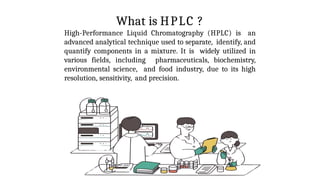
- In addition to RP HPLC, our skilled researchers can likewise offer information on the molecular weight of peptides established by mass spectrometry.
- A peptide might be 98% pure (suggesting very couple of peptide contaminations) yet still consist of some water or trifluoroacetate salt; those non-peptide components would be mirrored in the net peptide content as opposed to the pureness percentage.
- Explore front runner research study peptides with batch-specific COA documentation and HPLC/MS confirmation.
- However peptide purity is probably the single essential high quality metric for any research peptide.
High pureness is desirable since even little pollutants might interfere with experimental results or interpretations. This short article will damage down how peptide purity is gauged, why it stands out from peptide identification, what the usual pureness degrees (95%, 98%, 99%) signify, and what "research-grade" implies in practice for peptide reagents. Many peptide programs face logical uncertainty before they fall short medically. We use sophisticated reverse-phase HPLC to determine the purity of client peptide samples.
Peptides Lab Uk
Keeping a high degree of purity is critical due to the fact that pollutants can impact bioassays or reactions. For example, trimmed peptides or chemically changed side-products could bind to targets or produce adverse effects that confound your results. Particularly modified peptides or cyclic peptide sequences are challenging to verify, which affects quality control. We integrate LC-MS/MS and chemical digestion evaluation to specifically confirm the series and alteration sites of non-natural modified peptides. Recurring organic solvents, steel ions, or spin-offs from synthesis may trigger hazardous adverse effects.BOC Sciences offers multi-batch contrast evaluation to help customers develop basic material top quality criteria and ensure uniformity. Recurring non-peptide elements can change assay analysis, distort peptide material estimations, and make complex whole lot qualification. We support targeted analysis of pertinent residuals based on the job and example history.
Inconsistent fragment size circulation and morphology can impact bioavailability and stability. BOC Sciences is furnished with tools like DLS, TEM, SEM, etc, to fully assess nanoparticle size, circulation, and microstructure. For us, pureness isn't just a percentage-- it's a pledge of stability, consistency, and respect for the science being done.